
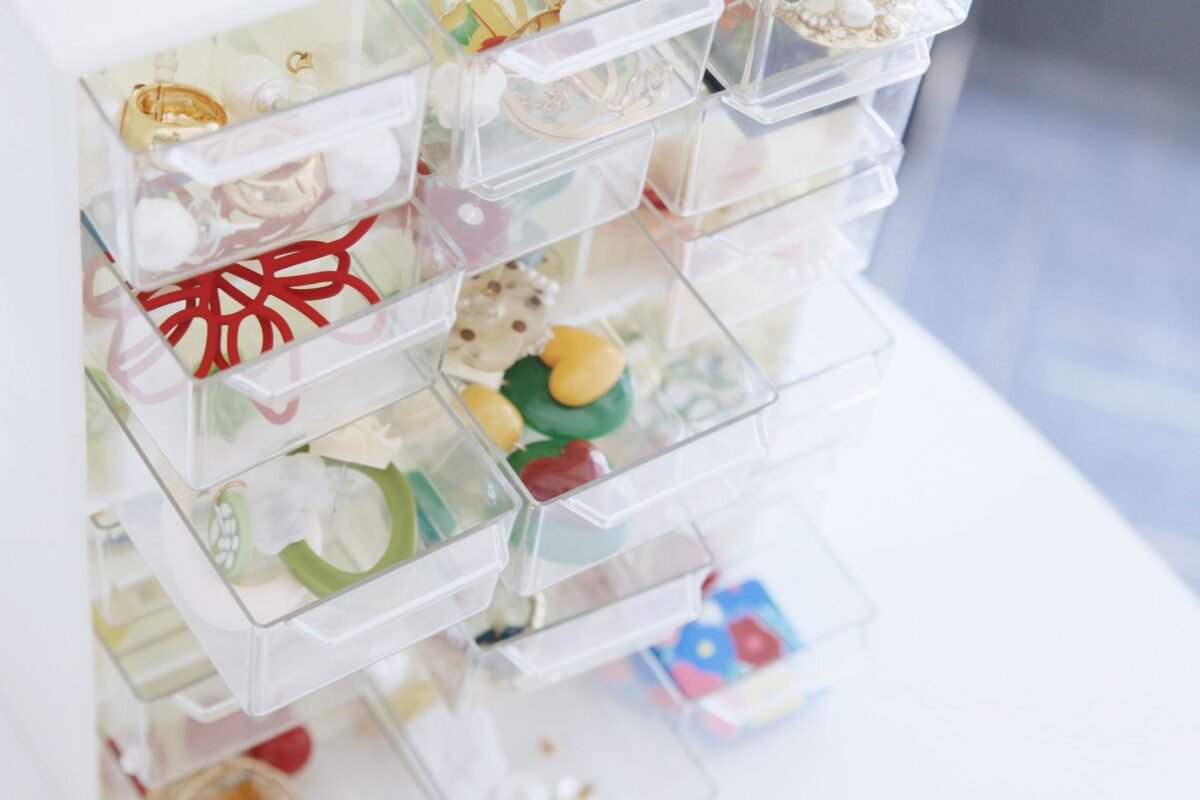
We have all experienced the morning rush panic: you are trying to finish off an outfit with your favorite stack of vibrant beaded bracelets or a bold resin cuff, only to open your jewelry drawer and find a chaotic tangle. Tassels are crimped under heavy metal bangles, delicate cords are hopelessly knotted around statement hoops, and that one personalized piece you wear everywhere has vanished under a mountain of acrylic and enamel.
While dainty chains and simple stud earrings easily slide into standard velvet organizer grids, statement jewelry plays by entirely different rules. Oversized silhouettes, chunky stones, wide cuffs, and multi-strand beaded elastic bracelets are notoriously difficult to store. When crowded into a flat drawer without a system, they not only create visual chaos—they can actually damage each other. Elastic strings stretch out under weight, enamel chips against raw metal, and fabric fringes get crushed.
If opening your jewelry drawer induces a sigh instead of inspiration, it is time for an intervention. Here is your step-by-step guide to turning bulky clutter into an organized, boutique-worthy display that protects your collection and makes getting dressed a joy.
The Problem with Standard Jewelry Organizers
Most commercially available jewelry boxes and drawer inserts were engineered for a traditional collection: rows of tiny square slots for rings, narrow slits for stud earrings, and shallow compartments for tennis bracelets. When you attempt to drop a three-inch architectural drop earring or a stacked wooden bangle into a one-inch-deep tray, the drawer jams, snagging fabrics and warping posts.
Bulky and beaded accessories require a balance of three core elements: depth, cushioning, and separation. Beaded stretch cords can snap if caught on the sharp edges of metal clasps, while heavyweight pieces can bend more delicate findings. To solve this, you need an organization strategy tailored specifically to pieces with volume and texture.
Step 1: The Full Audit and Sorting Process
Before buying containers or building dividers, pull everything out. Clear off a clean table or your bed, lay down a soft towel, and empty your jewelry drawer completely. Seeing everything at once is essential for understanding the true volume of your collection.
Sort your accessories into functional categories rather than mixing materials together:
- Beaded stretch bracelets and cords: Items that need flat surfaces or rounded forms to maintain their elasticity.
- Rigid bangles and cuffs: Pieces that need vertical clearance or wide bins.
- Statement drop and hoop earrings: Oversized designs requiring space so fringes, stones, and wire hooks do not bend.
- Personalized and demi-fine pieces: Sentimental nameplates, lockets, and delicate precious metals that should be kept separate from heavy costume pieces to prevent surface scratching.
- Seasonal or event-specific accessories: Bold holiday pieces or sports game-day accessories you only wear a few times a year.
Use this moment to inspect for repairs. If an elastic band feels loose or dry-rotted, set it aside for restringing. If an earring back is missing, add it to your shopping list.
Step 2: Optimize Drawer Depth with Modular Systems
The biggest secret to fixing drawer clutter is choosing organizers that match the depth of your furniture. Measure your drawer’s interior width, length, and height before selecting bins. Standard shallow vanity drawers (under two inches) benefit from long, borderless trays, whereas deeper dresser drawers (three to five inches) allow you to stack or build vertical channels.
Rather than buying a single fixed tray that might waste corner space, look for individual components you can puzzle-piece together. When designing your layout, you can explore modular drawer inserts that offer deep, open wells rather than tightly divided grids. Velvet, linen, and soft felt are the best materials for lining, as they provide natural traction that prevents heavy bangles from rolling back and forth every time you slide the drawer open or closed.
Step 3: Storing Beaded Stacks Without Ruining the Elastic
Beaded bracelets are beloved for their easy styling and tactile energy, but improper storage quickly ruins them. If you pile ten stretch bracelets into a single round bowl, the weight of the beads puts uneven pressure on the internal cords. Over time, friction against rough clasps can cause fibers to fray and suddenly snap during wear.
To preserve elastic integrity, use one of two methods:
- Velvet bracelet rolls: A soft cylinder lets you slide your favorite stacks on in coordinated groups. You can see your color stories instantly, and the cord remains gently expanded without being overstretched.
- Flat, channeled trays: Lay beaded bracelets flat in parallel, felt-lined channels. If you love to browse colorful beaded bracelets to mix and match daily, flat storage allows you to compare shades, bead sizes, and charms side by side in seconds.
Avoid hanging stretch bracelets on wall pegs or tall tree stands long-term; gravity combined with the weight of semi-precious stone or metal beads will gradually elongate the cord, causing awkward gaps between beads.
Step 4: Taming Statement Earrings and Fringed Accessories
Statement earrings bring an outfit to life, but storing them is a common pain point. Dusters with thread tassels, beaded cascades, and articulated acrylic hoops are prone to bending and catching. When tossed into an open drawer, threads crease and bead strands twist around earring posts.
To keep these oversized silhouettes pristine:
- Use earring cards: Keep the original backing cards, or purchase plain velvet or kraft paper jewelry cards. Securing the post through a card prevents the earring from rotating and tangling with its partner.
- Create diagonal dividers: Long drop earrings need elongated rectangular compartments. If your organizer slots are too short, lay earrings diagonally across rectangular spaces, or use adjustable bamboo dividers running the length of the drawer.
- Store tassels flat: For thread fringe and feather details, keep them lying perfectly straight in dedicated velvet trays. If a tassel has already become creased from drawer chaos, hold it briefly over steam from a kettle or iron and smooth it downward with your fingers before storing.
Step 5: Separate Everyday Personalized Pieces from Heavy Costume Items
One of the most frequent causes of jewelry damage in a shared drawer is the collision of hard metals with soft finishes. Custom engraved bar necklaces, delicate script nameplates, and demi-fine gold-plated items should never float loose in a tray alongside chunky resin rings or spike-studded cuffs. The weight of bulkier pieces will easily scratch high-polish finishes and dent hollow pendants.
Give your fine, demi-fine, and sentimental favorites their own distinct zone. You can tuck a smaller, specialized box directly inside your main drawer to act as an elevated sanctuary. It is often worthwhile to discover personalized keepsake boxes with plush compartments designed specifically to isolate meaningful charms, nameplates, and specialty rings from the rest of your daily rotation.
Step 6: Maintain the System for Good
The hardest part of organizing is not the initial tidy-up; it is maintaining it three weeks later when you are exhausted after a long evening. Build simple routines that prevent backsliding into chaos:
- The catch-all landing dish: Place a tiny ceramic dish right next to your drawer. If you are too tired to unfasten and file your accessories at midnight, drop them in the tray. Empty the dish once a week during your Sunday routine.
- Rotate seasonally: If your drawer is overflowing, pull out vacation-themed resin, holiday motifs, or stadium-approved game-day accessories and store them in labeled pouches on a higher closet shelf. Rotate them in when their season arrives.
- The visual check: Leave about 15% of your drawer surface empty. If every square inch is packed solid, putting items away feels like work, and you will inevitably start tossing things on top of the trays rather than into them.
Transforming Clutter into Everyday Joy
Your jewelry collection is an expression of your personality, playful spirit, and everyday style. When it lives in a jumbled heap, getting dressed feels frustrating, and beautiful pieces sit forgotten in the dark. By introducing tailored dividers, respecting the unique storage needs of bulky materials and beaded cords, and separating delicate favorites, you transform your drawer into a functional, vibrant display that brings ease to your everyday routine.
Disclosure: This post contains affiliate links. If you click through and make a purchase, we may earn a commission at no additional cost to you. We only recommend products or services we believe add value to our readers.